Benefits of Wordless Picture Books
First published May 2011. Updated 2019.
I’ll be honest. I was never a huge fan of wordless picture books as a teacher and I’m not really sure why. Perhaps it was because I was too concerned with the “nuts and bolts” of how to teach a child to read? But now that I have a young child, I see the amazing benefits of wordless books! Read on to find out 3 reasons I recommend wordless picture books for early readers.
Benefits of Wordless Picture Books
1. Picture Clues
“Using picture clues” is an important reading comprehension strategy that often gets overlooked in our quest to teach other, seemingly “more-important”, strategies. But it’s a great way for a young child to begin comprehending what he/she is seeing.
2. Teach Basic Story Structure
Wordless picture books are also a great way for children to begin understanding basic story structure. They can tell the story by describing the pictures and what is happening on each page. Afterwards, your child should be able to loosely describe what happened in the beginning, middle, and end of the book (sequencing).
3. Increase Word Vocabulary
Finally, wordless picture books increase a child’s vocabulary by encouraging the use of words they might not otherwise use. They also promote creativity and imagination by allowing a child to “embellish” the story however he/she wants to!
Wordless picture books worth checking out:
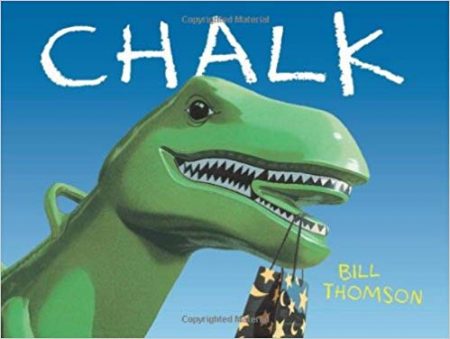
Chalk by Bill Thomson

Rainstorm by Barbara Lehman

Have You Seen My Duckling? by Nancy Tafuri

The Red Book (Caldecott Honor Book) by Barbara Lehman

Museum Trip by Barbara Lehman

A Boy, a Dog, and a Frog by Mercer Mayer

Pancakes for Breakfast by Tomie dePaola

The Lion & the Mouse by Jerry Pinkney

Changes, Changes by Pat Hutchins
Non Fiction Wordless Picture Books
Most wordless books are fiction picture books, but these ones below are nonfiction wordless picture books.

 by Donald Crews

 by Steve Jenkins

If you are interested in learning about more tried-and-true strategies for teaching your child to read, check out my eBook I Can Teach My Child to Read.

More helpful reading resources:



Wow! So true and such a great list of books! :)
What a great post! We have the Pancake book and my almost 4 year old loves to "read" it over and over. Such a good resource for their imagination! Love your blog!!
annie
moffattgirls.blogspot.com
It's so much fun to see where a child's imagination takes them when they become the narrator. Thanks for sharing your list–some of these are already on our bookshelf, and I'm going to check out the others.
These are great because they get the child to "tell" the story. My son really loved Trucks! I'll have to check out the others.
I love your site! Such great information! I highly recommend checking out the book “Wave” by Suzy Lee. It is my new favorite wordless book.
-Meredith
http://www.boycrazymom.com
“Carl the Dog” board books would be great to add to your list. Each book centers around themes many children are familiar with….preschool, park, birthdays, the home, Christmas… As a speech-language pathologist, I have used wordless books to take a sample of children’s language. Many children have difficulty with inference and prediction when it comes to reading comprehension. You are so right to encourage parents to begin these skills early on through the wordless books; because, some of us are stronger visual learners than we are auditory. “Seeing it” may help us learn how to hear or read it. Great ideas!
Jenae,
Great post! I am a mommy/speech-language pathologist. I was just talking with a co-worker today about using wordless picture books in therapy in order to develop narrative skills. I love the “Carl the Dog” books and “Goodnight Gorilla”, as well as David Wiesner’s wordless books (although his books are definitely higher level which I use with middle/high school students). I love this resource list! Thanks so much!
:) Katie@letsgrowspeech
World-less book has most important chapter who guide you and tell us how to live life with proper rule thanks for share it .