The Kitchen Lab: Using Vegetables and Fruit in Scientific Experiments

Guest Post by Max Cooper


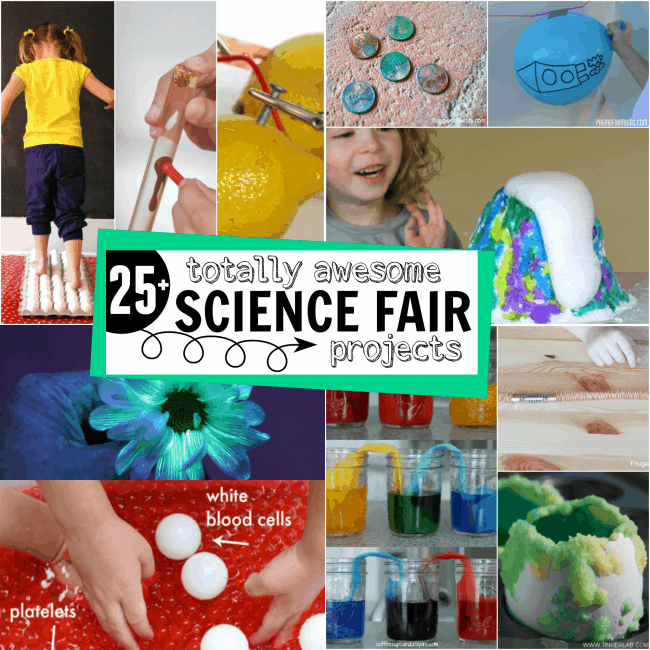
Experiments featuring vegetables and fruit are a great way to get kids interested in science. By using these everyday edibles to demonstrate scientific reactions, you can spark kids’ imaginations and start them questioning how the world around them works. Here are some simple and safe experiments involving fruit and vegetables that you can use to teach your kids about science.


Potato Power


Potatoes are boring, right? Wrong! You can use a potato as a power source to light up a very small bulb or a light emitting diode (LED), which you can buy cheaply from a hardware shop.


How to Make a Potato Battery


  1. Push a piece of copper wire and a zinc-plated (galvanized) nail into the potato to act as the electrodes in this experiment. The two objects should be close together, but don’t let them touch.
  2. Connect the other end of the copper wire to one terminal of the LED, and use more wire to connect the other terminal to the steel nail.
  3. The LED should light up as current flows through the circuit. If it doesn’t work, try swapping the terminals of the LED. You might have to dim the lights to see the LED light up.


What is happening inside the potato? When the metals come into contact with the potato flesh, a chemical reaction occurs which releases metal ions into the potato. More specifically, potatoes contain phosphoric acid, which reacts with the zinc to form positively charged zinc ions and free electrons. At the other electrode, electrons in the copper combine with the hydrogen ions in phosphoric acid to produce hydrogen gas. The excess of electrons in the zinc electrode and the deficit of electrons in the copper electrode cause electrons to flow around the circuit, powering the bulb.


Polishing Pennies with Ketchup


You can teach kids about acids by using ketchup to make an old penny shine like new. Simply squirt ketchup over some dull brown pennies and leave them for a few minutes, then let your kids rub the pennies between their fingers. When you rinse off the ketchup, the pennies will be shining brightly.


This experiment works because acid in the ketchup reacts with copper oxide, the dull brown coating on the pennies, to form copper acetate. When you rinse the pennies in water, the copper acetate dissolves, leaving a shiny penny.


The Corrosive Power of Cola


Cola is an even more effective cleaner of old pennies. Use cola instead of ketchup in the experiment above to show children just how acidic their favourite soft drink is. Even better, if one of your kids has lost a tooth recently, leave it sitting in a glass of cola. After a few weeks, the phosphoric acid in the cola will have reacted with the enamel of the tooth to turn it black and brittle. There will be visible cracks in the tooth and it will shatter if you hit it with a hammer. Use this experiment to explain to show your kids that they need to brush their teeth after drinking cola to get rid of the dangerous acids.


Max Cooper is a dad, a self confessed science nerd and a freelance insurance writer. He currently writes for Injury Settlement Guide, to help them to reach new audiences online.


Photo attribution: By Loadmaster (David R. Tribble) This image was made by Loadmaster (David R. Tribble) Email the author: David R. Tribble Also see my personal gallery at Google Picasa (Own work) [CC-BY-SA-3.0 or GFDL], via Wikimedia Commons


  • Share This Post:
  • Share This Post on Facebook
  • Share this Post on Twitter
  • Email this Post

Gift Idea: Science Kit for Kids (with free printables)


I love the idea of giving a gift to a child that involves quality time together, discovery, and maybe even a little learning!  A Science Kit offers just that…plus lots of fizzing, zooming, and reacting!

Actually, the entire reason I formatted my Fascinating Science for Kids eBook was for this very purpose:  to be able to eventually use it as a gift.  I didn’t add page numbers because I wanted to be able to exclude some experiments that might not be age-appropriate.  I wanted to instructions to be bright, fun, and inviting (hence, the multi-colored Chevron background).  :)

I was able to buy everything (including the tub) for less than $20 by buying generic of most items at Walmart!


After printing the eBook, I decided to laminate the pages back-to-back and bound them with a metal ring.


Here are the contents of the Science Kit:

  • Download and Print the Fascinating Science for Kids eBook (include the experiments you choose)
  • Matching Printable Gift Tags
  • Goggles (I just found some cheap ones at Walmart:  $1.67 for a two pack)
  • Personalized Lab Coat (a men’s white-collared shirt from Goodwill with the child’s name written on it)
  • Marshmallows
  • Rubber Bands
  • Balloons
  • Food coloring
  • Funnel
  • Vinegar
  • Baking Soda
  • Hydrogen Peroxide
  • A few tablespoons of Yeast
  • 2-Liter of Diet Soda
  • Mentos
  • Oil
  • Bar Magnet
  • Rock Salt
  • Radish seeds
  • CD/DVD
  • Cap of a Sports Drink


Combine all of the materials and print off a gift tag.

Wrap up the basket in some cellophane and add your tag!


Give this unique gift to a special child in your life for birthdays, Christmas, or just because!  


  • Share This Post:
  • Share This Post on Facebook
  • Share this Post on Twitter
  • Email this Post

Make Your Own Solar Oven

I’m a little sad that all the fun and fascinating science experiments are coming to an end…this is the very last one!  I hope you have enjoyed this series as much as we have!

This last “experiment” will be lots of fun to try this summer…make your own s’mores or even melt cheese on top of individual-sized pizzas!

Here’s what you’ll need:  a pizza box, aluminum foil, box cutter (or knife), permanent marker, ruler, Elmer’s glue, plastic cling wrap, black construction paper, and tape.

I took step-by-step photos of the process, but then I decided it would be much easier to share this video with you instead as there are several steps…


My friend Stacie over at Motherhood on a Dime also shares a simpler solar s’mores snack.


Download your free Science eBook with this experiment and 14 others by clicking below and entering your e-mail address.  You’ll immediately receive an e-mail that will have the link to the eBook!  If you would rather not be an e-mail subscriber, “like” us on Facebook and then send us a private message to claim your FREE eBook.

  • Share This Post:
  • Share This Post on Facebook
  • Share this Post on Twitter
  • Email this Post

Build a Hovercraft

Hovercrafts aren’t just for the future…you can make your very own right now with items you probably already have in your home!  We all thought this experiment from the Fascinating Science for Kids eBook was pretty amazing.  Even Prince Charming said, “Wow…that is REALLY cool!”

The effect reminded me of an air hockey table…the CD/DVD “floats’ just above the surface and glides freely with a minimal amount of force.  I’ll admit that Prince Charming and I even played with the ‘hovercraft’ after the boys were in bed!  :)

This idea was adapted from Steve Spangler Science and and All for the Boys.

 Here’s what you’ll need:  An old CD/DVD you are no longer using, a balloon, the top of a Sports bottle (with a push/pull opening), and a hot glue gun (or super glue). 


 1.  Make sure the sports drink cap is in the closed position (pushed down).  Use a hot glue gun, superglue, or gorilla glue to secure the sports drink cap onto the center of the CD/DVD.  Make sure you create an airtight seal.  (FYI:  I used gorilla glue, but I think hot glue would probably be the best.)


2.  Blow up your balloon and twist the end of it so that no air escapes.


 3.   With the balloon twisted shut, stretch the neck of the balloon over the top of the sport’s drink cap.


 4.  Slowly release the twist on the balloon, carefully pull the sports drink cap into the “open” position, and gently flick the CD on a flat surface.  Watch what happens!


The balloon will deflate after several seconds.  Once it is deflated, remove the balloon and repeat steps 2-4!


The Science Behind It:

As the balloon slowly deflates, the air it releases creates a cushion of air between the CD and the surface.  This cushion reduces the friction between the CD and the surface, allowing it to move more freely as though it is floating.


Download your free Science eBook with this experiment and 14 others by clicking below and entering your e-mail address.  You’ll immediately receive an e-mail that will have the link to the eBook!  If you would rather not be an e-mail subscriber, “like” us on Facebook and then send us a private message to claim your FREE eBook.


  • Share This Post:
  • Share This Post on Facebook
  • Share this Post on Twitter
  • Email this Post

Make Your Own Compass

We’re winding down on Fascinating Science for Kids experiments…we only have two left!  Today we’re learning how to make a compass using water, a bowl, a needle, and a piece of craft foam or waxed paper!

This idea originally came from Quirky Momma , but I didn’t have a cork…so I improvised (and use Steve Spangler Science for a little help as well).


 Here’s what you’ll need:  a small dish of water, a sewing needle, a bar magnet (without coating, preferably with the poles labeled), and craft foam or waxed paper.


1.   Take the “North” side of your bar magnet and place it perpendicular to your needle.  Starting at the top of the needle, slide the side of the bar magnet along the length of the needle.  Do not slide back and forth, but rather slide from one end to the other.  Stop and start back at the end you began with.  Repeat several times (like fifty).


2.  Turn the needle upside down and use the opposite end of the magnet and repeat the same process until the needle is magnetized.


 3.   Have an adult thread the needle through the waxed paper/foam circle.  This will cause the needle to float on top of the water


4.  Place the needle on top of the water.  Watch as the tip of the needle spins to point northward!   (I did it backwards…the side of the needle with the hole was the one that ended up being north.)


The Science Behind It:

When you rub the needle with your magnet, a little bit of magnetic material will end up being left behind on the needle.  This creates a magnet!  In order for the needle to act as a compass, it needs to be placed in an environment with less friction, which in this case is the water.  But first it needs to be able to float, which is why we use the waxed paper/foam.  Once the needle and waxed paper/foam are placed on the water, the opposite poles of the needle are attracted to the Earth’s magnetic field!


Download your free Science eBook with this experiment and 14 others by clicking below and entering your e-mail address.  You’ll immediately receive an e-mail that will have the link to the eBook!  If you would rather not be an e-mail subscriber, “like” us on Facebook and then send us a private message to claim your FREE eBook.


  • Share This Post:
  • Share This Post on Facebook
  • Share this Post on Twitter
  • Email this Post