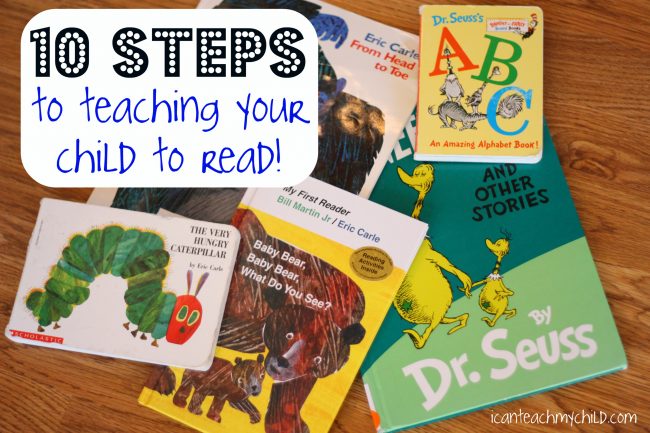
How To Teach A Child to Read In 10 Easy Steps
Teaching your child to read can be one of the most rewarding experiences of your life! Here we share 10 tips on how to teach a child to read, from pre-readers all the way to school-age children!

When Do Kids Learn To Read?
As a former first grade teacher, teaching children to read is one of my greatest passions! But because most children don’t start actually “reading” until around 6 years old (which is upwards of the targeted age range for my blog), I didn’t want parents to feel pressured that their 3-year old needs to start reading (which, by the way, they don’t!). However, the information shared below is general information that is beneficial for children of all ages, whether your child is ready to read or not. Don’t implement all of these strategies at once, nor should you expect your child to be able to do everything right away. Learning to read is a process and the information below is simply for you to implement when you feel your child is ready.
Once your child is ready to begin reading, you will need to find a systematic and explicit program that teaches phonemic awareness and phonics. This is essential. Learning to read is like breaking a cipher code (and contrary to what the title of this post suggests, it is NOT easy). Every child must learn the code and it makes the most sense to teach this explicitly rather than depending on kids figuring it out on their own. Please also recognize that although the suggestions below are labeled as “steps”, they are not necessarily in consecutive order, nor are they in order of importance. The information you will find here is simply a guide to help you see how each of the components of reading fit together for your pre-reader. If your child is school-aged and you are looking for a curriculum on how to teach a child to read, I highly recommend Pathways to Reading Homeschool.
How To Teach a Child To Read
1. Read Aloud to your child
Teaching your child to read is truly a process that begins at infancy. No, I am most certainly NOT advocating programs that claim to teach your baby to read using flashcards! What I AM encouraging you to do is to begin reading with your newborn within days of welcoming her home! Not only is ongoing reading time building a special bonding time for the two of you, it instills in her a love for books. Enjoyment while reading is one of the single greatest predictors of reading success in school-age children. If children don’t learn from an early age to enjoy reading, it will most likely hinder their ability sometime down the road.
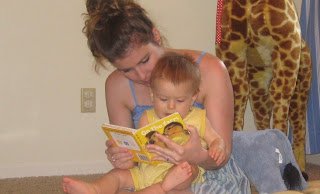
Here are a few suggestions for the types of books to read to your child. But by all means, read whatever your child responds to and enjoys!
- Birth-1 Year: Lullabies, Board Books (with real pictures), Cloth Books (with various textures), Song Books
- 1 Year-3 Years: Rhyming Books, Song Books, Short-Story Board Books
- 3 Years-5 Years: Alphabet Books, Song Books, Picture Books, Rhyming Books
2. Ask questions
Asking questions while reading to your child is not only great for encouraging your child to interact with the book, but it is also extremely effective in developing his ability to comprehend what he is reading. You see, if our main objective in “reading” is getting our child to “sound out” words, we have missed the boat entirely. Even children who can decode words and “read” with great fluency still might not be able to comprehend what they are reading. If a child can’t comprehend what he is reading, there really is no point to reading at all!
While your child is a baby, ask him questions such as, “Do you see the cat?” while pointing at the picture of the cat. This will not only develop his vocabulary, it will also encourage him to interact with the book that he is reading. As he gets older, ask him to point to things in the book himself and make the noises of the animals he sees.
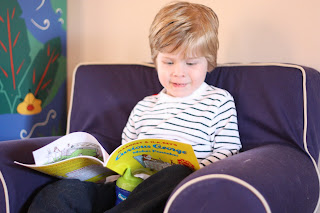
Once your child is about 2 or 3-years of age, begin asking questions before, during, and after reading the book. Show your child the cover of the book and ask him what he thinks the story is going to be about (predicting). While reading, ask him what he thinks is going to happen in the story or why he thinks a character made a particular choice (inferring). If a character is depicting a strong emotion, identify that emotion and ask your child if he has ever felt that way (connecting). At the end of the book, ask if his prediction(s) came true. Afterwards, ask him to tell you what he remembered happening in the book (summarizing).
Modifying each of these techniques during read-alouds to meet the developmental stage of your child is a great way to promote and increase reading comprehension!
3. Be a good (reading) example
Even if your child is fascinated with books from an early age, her fascination will quickly dwindle if she does not see reading modeled in her home. If you are not an avid reader yourself, make a conscious effort to let your children see you reading for at least a few minutes each day! Read a magazine, a cookbook, a novel, your Bible…it’s up to you! But show your child that reading is something that even adults need to do. If you have a son, share this article with your husband. Sons need to see their fathers read, especially since it is not something that young energetic boys are naturally prone to doing.
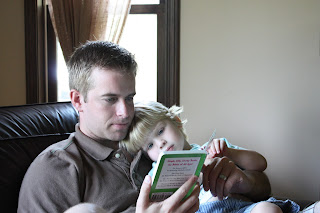
As parents, we can sometimes get wrapped up with what exactly our children should be doing to be successful. But we often forget that children often learn by example. Grab a book and take a load off…for your child’s sake, of course!
4. Identify letters in natural settings
Before our boys were born, we painted and hung large wooden letters spelling their name above the cribs as a decorative accent in their rooms. I would have never guessed that those wooden letters would have such a learning incentive for Big Brother! Around age 2.5, he began asking what letters were above his name. That’s honestly how he learned to spell his name…and he can spell his brother’s name too because he has taken an interest in his letters as well. In technical terms, this is called “environmental print” and includes all of the print we are surrounded by–fast food signs, labels, traffic signs, clothing, magazines, etc.
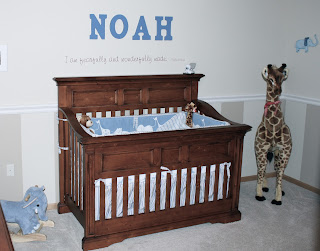
Often times, we want to force our children to learn letter names by a certain age. We buy flashcards or DVDs claiming to teach our children their letters. We drill our 2-year old over and over for minutes on end. Don’t buy into this…allow your kid to be a kid and take advantage of the “teachable moments” as they come along! Children’s minds are like sponges and are certainly capable of memorizing the alphabet from drilling, but that’s not the most effective method that will produce the best long-term results. Your child will be curious about the print he sees around him and will ask questions. That’s your chance to jump in with a practical application that actually has real meaning and significance to your child.
Don’t misunderstand me and think that I don’t think learning the alphabet is important. It is certainly important…but the method in which we teach them is even more important! Always keep in mind that our ultimate goal is to foster a lifelong learner who loves to read, not a child who has simply memorized without any significance.
5. Incorporate multiple domains of development
Children learn best when multiple senses or areas of development are included. That’s why hands-on learning produces longer retention and more meaningful application. Once your child has shown an interest in letters and you have already begun to utilize natural settings for identifying those letters, begin implementing activities that incorporate as many senses as possible. Keep in mind that learning letter names isn’t nearly as important as learning their sounds!
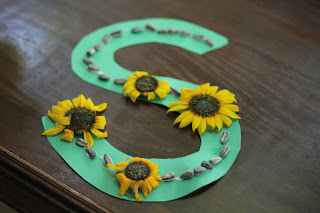
There are a plethora of ways to incorporate multiple domains of development in regards to letter recognition and early-reading skills. Alphabet crafts allow your child to learn the shape of a letter along with an association of the sound it makes all the while utilizing fine motor skills in the process of cutting, gluing, and creating! Playing games that involve gross motor skills (like tossing beanbags on the appropriate letter) are also wonderful ways to include movement. Of course, every child loves songs and rhymes! Take an inventory of your child’s strengths and areas of interest and target activities to fit them!
6. Classify the Genre
Once your child is around 5 and can recognize the difference between real and make-believe, I would suggest starting to help your child understand various genres of books during your reading time together. This might seem complicated, but it’s really not. There are around 5 different genres of children’s books that I would encourage you to point out to your little one. Of course you can use the term “type” rather than “genre” if that is easier to remember.
- Nonfiction (real stories or facts about animals, places, people, etc)
- Fantasy (make-believe, can’t happen in real life because of magic, talking animals, etc)
- Realistic Fiction (a made-up story, but it could technically happen in real life because the characters and situations arebelievable)
- Alphabet Books
- Song Books
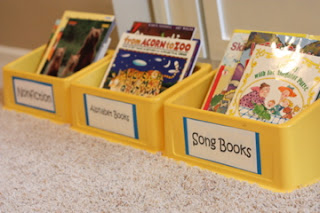
When children classify a book into a certain genre, they have to first summarize the book in their head and recall details. Then they have to use that information to decide which type of genre that particular books fits into. Finally, your child will be recalling details from other books in the same genre, making connections between the two. This simple activity that might take 5-10 seconds of your time after reading a book but it certainly packs a punch of thought and processing in that young brain!
Also, it’s important to note that not all books will fit into one of these genres, especially books that are considered “phonics readers.” I would suggest that you do this exercise only with high-quality children’s literature, not with books that are attempting to get your child to “sound-out” on their own. Most picture books found in children’s libraries will fit into one of these genres.
Remember, our goal is for our children to learn to comprehend what they’re reading…otherwise reading will honestly do them little good. When we encourage our children to think about and process the book we’ve just read together, we are inadvertently modeling what we hope they’ll one day do independently!
7. Focus on Phonemic Awareness and Phonics
9. Decoding
 |
| Find these finger puppets and more at Oriental Trading |
10. Use a reading program with explicit, systematic instruction once he/she is in kindergarten and beyond
Most of the skills up to this point are what I would consider “pre-reader” skills that we, as parents, can work on during our child’s earliest years to make the process of learning to read much easier for our children. Once your child reaches school-age, be sure that you are using a program rooted in the science of reading, with explicit and systematic instruction in both phonemic awareness and phonics. If your child is headed to school, ask to look over the curriculum to ensure it is strong in these areas specifically. Some children will naturally learn the phonetic code more easily than others, as Nancy Young’s Reading Ladder suggests, but ALL children benefit from early code-based instruction.
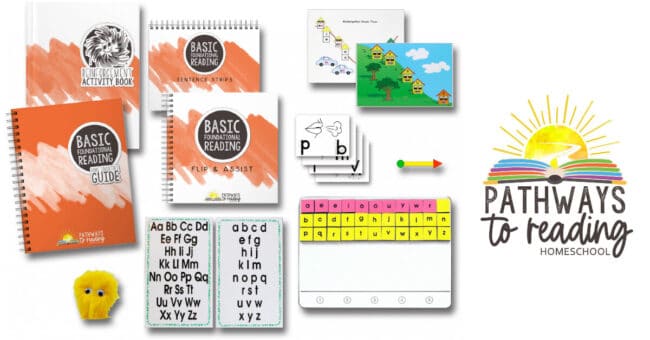
There is no better foundational reading program, in my opinion, than Pathways to Reading. The original curriculum has been used in classrooms and clinical settings for the last 20 years. The program has been involved in numerous research studies, showing statistically significant results. Pathways to Reading Homeschool now offers their groundbreaking curriculum for home educators, starting with Basic Foundational Reading (which is the equivalent of kindergarten-age instruction). All 5 areas of reading instruction, as identified by the National Reading Panel, are incorporated: Phonemic Awareness, Phonics, Vocabulary, Fluency, and Reading Comprehension. This is such an incredible resource for families and I can’t recommend it highly enough!
Learning To Read is a Journey
In summary, here are some practical suggestions you can implement every day based on the learning to read strategies shared with you in this post. Obviously, you can’t implement all of these suggestions with children of all ages, so use your judgement about what is the best way to teach a child to read.
- Read to your child every day!
- Ask your child questions before, during, and after reading.
- Let your child see you reading.
- Look for letters while out and about and in the environment around you.
- When teaching letters and letter sounds, incorporate as many senses as possible.
- Read a variety of books and make a game out of guessing the genre.
- Have fun rhyming
- Play these oral phonemic awareness games together (no materials required)
- Encourage your child to sound out short words (consonant, vowel, consonant).
- Most of all, have fun together!
This post was first published Feb 2012. Updated 2018.



Love this post!! As a former 1st grade teacher now SAHM, you summarized all of that so beautifully! I agree with so much of what you said! Thanks for sharing!
I’m an educational psychologist that specializes in helping kids learn the sight words through pictures, movement, and creativity. I love the ideas in this post and was tempted to add more about teaching difficult sight words, but I got worried that I would sound like I was ‘pitching’ to your readers. So, I decided to just send you a message. Love your blogs.
Melanie West
Great!
Wow that was so very informative! Thank you!
Yeah it really was! (:
Good article,I have trained my child for reading and writing with one of the online course it helped my child to read and write very fast , parents those who looking for full guide.
i hope this will help you all >> x.co/readwrite <<
Read and writing
Thanks for your post…can I ask you for some advice??? My 5 year old knows all the parts of reading, but isn’t reading on her own yet. What I mean is she knows all her letter names and sounds, knows how to sound out words, knows several dozen sight words, knows to read a book from front to back, top to bottom, left to right, etc. But something isn’t clicking. If I had to guess its like she thinks she should have every word memorized and she should just know all the words by sight, and if she doesn’t, then in her mind, she can’t read it. I’m at a loss to help her over this seemingly final hurdle. Sorry to bother you with my personal situation, but your post on reading caught me on a day that I’ve really been stressing over this. Any advice is much appreciated.
Thank you for all you do, I always enjoy reading your posts!
I’ve taught 1st grade for five years. I’ve also taught 2nd and 4th. From my experience reading is not only about word call and decoding. Your child needs to look at the print, slide their finger under what they are reading, get their mouth ready and sound it out. Work with word families and use an easy reader that has the word family in it. When you begin a story reload the vocabulary. You can use magnetic letter, dry erase markers on a table to to sound out main words in the story. For example if you have an easy reader that uses the family -op, then work and teach words that are in the story like mop, top, etc. Then when the child sees the word in print in the context of the story they should be able to recognize the family and use decoding skills to figure out the word. Don’t ever tell them the word b/c then they will get use to having someone read the words to them and they do not use the strategies taught. One last thing, your daughter is only five. Fluent reading normally doesn’t kick in til mid first grade. She just may not be developmentally ready to just pick up a book and read. Keep doing what you are doing and use the suggestions above and you will see progress. Don’t stress. Your daughter is already ahead of most of her kinder peers already.
Sorry I meant to PRE load the vocab to get the child familiar with the wording in the text. oops
Hey my nephew he’s a 2nd grader and is 7 years old he doesn’t know how to read or write his teacher says his reading level is from a kindergarten to 1st grade. How can i help my nephew read or write? (:
Well if you are teaching him nicely he will learn better, if he has some kind of disability it will be even harder. Make reading for him fun!
I would echo everything that Mrs. T said, including the fact that your five-year old is already achieving many of the skills that we wouldn’t expect until first grade. So don’t stress about it! :) Easier said than done, right?!?!
Also, try to have a balance of you reading to her “just for fun” (perhaps some of her favorite picture books) and then her reading to you (very simple books with few words). The one thing you don’t ever want to do is stifle a child’s love for reading or being read to.
Try the Bob books starting with the blue box 1. it will get her reading. my boys taught themselves to read with the bob books. They learned the letters from leap frog and sight words from learn the sight words DVDs then they just taught themselves to read using bob books. After the blue box we went to the sight words purple box. Then level 2 yellow box then level 3 red box. They cost about $10.00 each. Now they read level 1 books from the library and other series books. They get 1 piece of candy for each book they read so they come to me to read a book. Sometimes they will read 3 or 5 books in a day so they can have a piece of small candy for each.
What happens when there’s no candy?
hi,
thanks for your post.Just want to ask if you bought the sight words dvd also from leapfrog company.thanks
Thank you for such a wonderful post!
The most helpful parts to me were the age guidelines (tho I realize these are fluid/individual)….so may I ask what ages you recommend for the other activities not linked with an age in this post, please?
Thank you!
I would say that no earlier than around 4.5-5 you could start working on just a FEW sight words and maybe word families and “sounding it out” using games. But be sure to make a game out of it as this point so that it won’t turn your child off to learning these important concepts when their in kindergarten, first, and second grades.
Excellent recommendations and guidelines! We’ve found that audio books, ebooks and apps can also be beneficial to building skills and fostering a love of reading.
LOVE your post! You have captured so many important Pre-reading skills. I am passionate about early literacy, and it makes me so sad when I hear parents tell me their baby/ child/ toddler etc is too young for books. May be too young to learn to read, but NEVER too young for books, in my opinion :)
Thanks for the informative summary!
Alexis
What a great post! May I ask for some advice? I am homeschooling my 7 year old daughter. Our curriculum has her learning about 15-20 new vocabulary words a day. She has a bit if trouble. She can read a sepecific word, and then have to read it in a sentence on the next page and completely blanks. What do I do? How do I handle this? She also tends to see a letter and assume what word it is (ex. Haul- she read as “hug”). How do I help her get through this? I have not been able to find any resources on reading for a 1st grader. Also what level she should be at, if that even matters right now. Your help would be greatly appreciated. Thank you.
Hmmm…it sounds to me like maybe you need to look around at some other supplemental reading curriculum out there. When you say that she is learning 20 new “vocabulary” words a day, do you mean that she is supposed to memorize these by sight? If so, I think you might be better off spending at least a little bit more time teaching elements of phonemic awareness and phonics (to where she will have the skills to actually learn to decode a word and not just memorize it). I used a curriculum called “Pathways to Reading” (linked to above in the “phonemic awareness section) in my first grade classroom and it was AMAZING! It taught all of the vowel sounds as well as blends, digraphs, and phonics rules. I would say that with ANY reading curriculum you use, you need a healthy balance that focuses on: reading comprehension, phonemic awareness, phonics, sight words, and vocabulary. Hope that helps!
My son, Tristan, is 4 1/2 and just started to read. I wasn’t trying to teach him to read at all. I’ve been reading to him forever (I was an English major, I love books). He’s known his ABCs since he was at least 2. The only other thing that we did was let him listen to books on CD/tape/MP3. We tried to have the books so he could follow along, but he didn’t always. Usborne books has a great selection of books with CDs – Ted & Friends and Farmyard Tales are his favorite. That helped him identify the words himself (I think). :)
I love this post! As a former first grade teacher, I am thrilled to see that the information you shared comes from experience. ;o) I feel exactly the same way you do on all points. One thing I realized when teaching my first graders is that parents would often push their children to read more challenging books, but never allowed for their child’s comprehension to grow with their reading skills. I also think that a huge developmental challenge for these little guys is confidence. My little 6 year olds struggled with confidence and so it was always hard to explain to the parents that they might be reading what seems to be “easy” books, but they can’t grow as a reader until they have the confidence to take chances and move forward. Great post! Thanks for sharing ;o) Consider it Pinned ;o) lol
I home schooled all my kids and we used Sing, Spell, Read, Write to teach them to read. They have workbooks for pre-school age too. My kids loved it and so did I. Reading came very easy to them and I know it was this curriculum . I would use it all over again.
Sorry, but I feel the need to brag here, so please forgive me. My little one is 4 years old and almost at 4th grade reading level. We are currently reading chapter books and after each chapter she is ask qustions about the chapter and she always gets it right.
SO, now I have a question for the teachers (former and current). We have been working on writing and on coloring and she will only do it when she wants to. How I can I make writing and coloring fun so that she will want to do it more often.
While that is certainly quite an accomplishment that she is reading at the 4th grade level at age 4, I find it a bit ridiculous to brag about. As a mother of a 4 year old, this would annoy me if you were chatting about this at the park. Our kids develop at their own speed -it does not make one better than another.
I know I am responding to an older post; however, I will go ahead since it may benefit someone else. Since it is now spring, take your little ones outside and practice colors, shapes, numbers, letters, writing, etc. using sidewalk chalk. It never fails to entertain and teach at the same time. Sounds like you’re doing a great job with your (now) 5 year old, just don’t be sucked in to pressuring her to handle more than she is ready to handle.
“Grandma Sherbert” this is what I do too! I keep sidewalk chalk in full supply. They can trace, and trace over your letters. They can play ABC hopscotch, while we sing the alphabet. I have 2 kids, one is 4 and the other 5 (and tend to be close in learning capabiliites i.e. learning toghether, helping each other). The outside elements can be used as learning support. Start taking it one step further, and find the ta-ta-tree that starts with T and ta-ta-teeth starts with t too, well so does the number two! Why push them, as a PSYCHOLOGY MAJOR, the only issues pushing a child will create, (such as the 4 year old reading at 4th grade level shame-shame-mommy) the child will develop anxiety issues, confidence issues, relational issues, and the harder the pusher the more you will see Obsessive compulsive disorder, and did I say multiple anxiety realted issues, perfectionist issues, acute shyness can occur as well. All things, that later on, your child-teen-or-adult will be sitting in my office over. CONFUSION over what is normal, what normal even is, and why no matter what you try you cannot acheive that feeling of just being plain ole’ normal, due to the over-expectations your mother had. You then have them for yourself, and suffer miserably!
Go outisde, buy you child some ch-ch-chalk, an some i-i-ice cream and trace some la-la-leaves. Thank you
I wholeheartedly agree with zandcmom, while a four year old child reading on a fourth grade reading level is a great feat, the child is clearly lacking in age appropriate milestones. It’s like learning to run before they crawl… it’s not that it can’t be done, it’s that it SHOULDN’T be done. Allow the child to be a child.
Why should it not be done? Unless it is stressing the child out or forcing him I do not see why it “SHOULDN’T” be done. That is a nice analogy but I don’t see how it is a valid one. Just because a child I advanced or allowed to be ahead of the game does not mean they are not being allowed to be a child. Maybe he is gifted maybe not perhaps he is interested in learning. Children love to learn so yes I agree Let him be a child.
I totally agree that kids should have fun yadda yadda.. but some kids indeed is gifted there is nothing wrong with that and “judging” the mom is pushing etc is very narrow minded…..all kids are different some has 100 IQ some has 150 IQ , it is genetic + environment.
I came across this article on Pinterest and I love it. I am a kindergarten teacher and a mother of a 2 1/2 year old. I agree so much with what you have written and love how you have compiled it! I was wondering if you would mind if my kindergarten team used what you have written in a packet for parents at kindergarten roundup (we may change parts that are specific to you…curriculum used, etc.). :)
In response to Robyn, here is a little snapshot of how writing looks in my classroom:
Students think of something that has happened to them personally, sketch a picture, and then write about it. They may start by just labeling the picture, or they may be writing several sentences. I sometimes draw lines for each of the words they tell me, so they can see where they should be writing (for example, if they say, “I went to the park.” I would draw __ _______ ____ _____ ________).
You could have her just label things in a coloring book or draw her own pictures and label them, too. You could have her cut out pictures from magazines or newspapers and write what is happening (make it up). She could use stamps and then write words or stories to go with the picture she stamps. Just a few ideas, hope it helps! :)
This article is phenomenal!!!! Thank you for emphasizing the importance for creating a love for reading and not a ‘system’ for learning to read. I’m a 1st grade teacher and mother of 2 preschoolers. Even with all my background knowledge on teaching children to be successful readers, I still find myself stressing out when it comes to my own children by comparing them to others (mainly family members around the same age). I’ve always said there’s so much more to reading than just sounds/words on a page. I look forward to reading more on your blog.
Wonderful post. I forwarded it to my husband. Very well said. I know my mother who teaches 2nd grade would agree.
I love reading. to Olivia joy
Robyn – At four, I would say that the important thing is not to specifically get her to colour or write, but to have general fine motor skills. Do open-ended crafty and arty things which are about having fun and experimenting, not producing a specific outcome like a coloured-in drawing or something that looks like a word. Look at pictures of different styles of art and talk about them with her, encouraging her to observe the detail, and have feelings and impressions about what she likes and doesn’t like. Encourage any fine motor activities that she likes, and don’t stress if writing or colouring is occasional. Writing probably feels very laborious to her if her other language skills are so good. Have you tried offering to help her write a story and just get her to help you with the occasional letter or word, so she feels like she is getting a story out that has the complexity she’s interested in without getting stuck on the work of manually getting down the first few words? I’d perhaps look at incorporating little moments of writing or drawing into daily life, rather than being a task in and of itself. So perhaps you could make labels for things together, or you could play a game of snakes and ladders but introduce a new rule that if she lands on a snake she can go down the snake or draw a snake or write an s (the choice is hers – I’d avoid making it something she has to do as well as going down the snake cause then it will seem like a punishment rather than an opportunity to escape a punishment). Look at ways to make games of it that make it a bit more exciting: eg. (“Let’s see how small we can write your name? Can we get it smaller?” Then take chalk or water and a paintbrush out to the footpath and say, “Now let’s see how BIG we can write your name?”) Decorate soaps, glasses, and t-shirts. Write in the sand at the beach or playground.
What excellent ideas! Something I did with my kids (and now do with my grandchildren) is keep my shopping list within easy reach then ask them if there is anything they need when I go shopping. They write it on the list since I’ve told them I will forget if it is not written down.
Great post! Pinned it ;-)
My daughter got her first book from the hospital at birth ;). I love that hospitals are even promoting reading at birth. Can I just say I hate hate hate sight words. My middle daughter is 9 and sight words were the death of her. Now that she is being taught all of the rules and exceptions through the Wilson program she is doing much better. I get that most kids learn to memorize sight words, but not all of them do. And I truly wish so much stock wasn’t put on memorization in reading. Especially since the amount of sight words or high frequency words they expect children to memorize seems like an awful lot of words that don’t follow the general rules of reading. They can be taught to break down every word. My oldest did fine with sight words though so I know my middle daughter is probably the minority here. However, I have also noticed that my oldest doesn’t have the skills to break down a word she doesn’t know the same way my middle daughter can.
Yes, it certainly is a balance! No greater emphasis should be put on one area over the others (with the exception of reading comprehension). Sight words are typically extremely beneficial for early readers who get frustrated when words don’t follow the “rules”. This is the only area of reading where I feel like memorization is beneficial, in context with all the other reading strategies, of course.
I think the only downside to having children “sound out” (decode) every single word is that it impacts their fluency, which can also have a negative impact on comprehension when it takes 2 minutes to read a single sentence.
Thanks for sharing your thoughts! I am always amazed to see how different my two children are and I’m sure this will be even more apparent as they get older.
I originally came to your site for the homemade detergent recipe. I had no idea you were a 1st grade teacher. I’m a current one and this is about the best dang advice I’ve ever seen for parents. I’m very tempted to print it and pass it out at Meet the Teacher! Although, by then, it might be a little late!
I am a retired teacher and have read a lot of info over the years on teaching reading. This post is direct and easy to follow outlining how each step builds on the next. Thank you for one of the best explanations I’ve read anywhere on how to teach a child to read.
This is indeed a wonderful post! I have a 14 month old who loves his books. I will be socking this article away for frequent reference. I will note, however, I found the odd reference about how men are not prone to reading very strange indeed. Perhaps I am just unusually fortunate in this respect, but so many of the men in my life adore reading, that it struck me as quite false. I am, in fact, married to a male librarian who loves to read and is beyond thrilled that our little guy has begun grabbing books and bringing them over for him to read. But that assertion aside, an excellent article. Thank you!
There have been lots of studies/articles written on this subject of men not reading as much as women. Here are just a few:
http://www.npr.org/templates/story/story.php?storyId=14175229
http://www.guardian.co.uk/books/2009/mar/22/women-reading-books-study
Consider yourself blessed to be surrounded by men who love to read! What a great example for your children!
Huh. I had no idea. The hubby will be rather pleased that he is exceptional in yet another facet….
I have a question about having your children see you read…. My husband and I read a lot, but mostly on-line… Kindle, iPad, even our newspaper… will this translate to what you mentioned above? Does our 5 year old understand that we are reading and not “playing” on the computer?
Thanks so much for posting this! Our son just turned 2 and LOVES reading books. He would have us read to him for hours…in fact when his grandma comes over I think she really does read to him for multiple hours through the day. We read board books about trucks and tractors and animals and also read a lot of Dr. Seuss and Bible stories and Curious George. For many months now I have set aside time for him to color with crayons and I would write down the alphabet or short words and go over the letters. We sing the ABC’s a lot and have worked on his saying vowels. He began to recognize the letter “A” in many places at the beginning of the year. Last week we were at the doctors office and there was an alphabet rug and he began naming them through “F”. And he just got an etch a sketch for his birthday, so as I wrote down the first few letters of the alphabet or wrote down his name he began naming them! I was amazed! Not that he does it perfectly but I really didn’t know the capabilities of a 2 year old. I’m really wanting to find more fun ways to encourage him but not push him too hard in it. I look forward to putting your suggestions into practice as he continues to learn!
p.s. I hated to read when I was little (I really didn’t enjoy the public school reading curriculums) but now I love reading. My husband loves to read even more than I do and so do the men at our church, young and old. In fact, one of our friends grew up in a home where his father literally had thousands of history books and had read most of them. Now his son is also an avid reader.
Hey would you mind letting me know which webhost you’re working with? I’ve loaded your blog in 3 different internet browsers and I must say this blog loads a lot quicker then most. Can you recommend a good web hosting provider at a fair price? Thank you, I appreciate it!
Now I am ready to do my breakfast, afterward having my breakfast coming again to
read additional news.
Thanks for these tips. Your suggestions really put things in perspective for me. My 5 year old daughter’s friends seem to be so much better than her at decoding and sounding words out. I realize now that my first mistake was comparing her to other children and, in a panic that she was “behind,” I kept trying to make her sound words out and now I fear I’ve intimidated her when it comes to sounding words out. :(
I’ve read to her since she was a newborn and she loves books. She likes me to read the same books to her over and over. I ask her questions about the story, she looks at the pictures and, without my provocation, she loves to study the pictures and talk at length about the story. I realize now, thanks to your suggestions, that while she is not sounding out and decoding, she is comprehending the actual story, which is more meaningful and productive.
Thanks!
Awesome! I needed this post to show to my parents of my preschool we are learning but maybe not with pencil and paper all day long like my generation grew up with. We use tactile learning for letters in salt trays and we do the letter cut outs and song books etc… everything mentioned. Thank you very much! I am sharing this today.
awesome post…
hope many would take this to their homes
Hi, my daughter is 3 years old (turning 4 in 2 months) she also knows the letter’s names and sounds, and some sight words, and she reads a lot of simple words, but with words that are not very familiar for her, she will only say the sounds of the letters of the word, but can’t actually say the word and sound all the letters together :-( like she would see the word “glass” and would say the sounds of each letter separately not being able to say the word.. Should I just tell her the words so she can try and remember for next time, or should I wait until she gets it by herself?
My little girls who is 5 can read quite a bit for her age I feel, if based on Biff and Kipper books then she is about a level 4 and heading to a level 5.
She can do a lot of word building BUT, i think she feels that because it seems difficult to her then she doesn’t particularly enjoy reading…I have to work really hard with her to get her to focus and to actually pick up a book, otherwise I don’t think she would bother..This worries me greatlybecause as we all know if reading is not something you enjoy then life will be more difficult for her than if she enjoyed it.
She is a very headstrong little girl and i struggle to keep her to that level where she isn’t being pushed but she is still doing some reading so that she doesn’t slip back over the Summer holidays….Help anyone who can help me show her how enjoyable it can be, … we have been taking trips to the library, weplay Roadsign games when out driving, whenever we go anywhere I encourage her to try and work the words out…even if it be the Push and Pull signs on the doors…
We play games at home, she even plays the Cbeebies games n my computer and I try and get her reading the instructions so i’m trying to expose her to words in as many varied ways as possible…I do do the big praise aspect with her when when we learn new words or we read a page etc, and she is read to every day…..Has anyone any more advice please….
Great advice! It is so important that children develop a love of reading, even more so then developing the actual skills!
I love this! I’m a Communicative Disorders major and these methods are not only accurate for teaching how to read but are essential in helping children learn language. I hope parents take note of this (:
I enjoy what you guys are up too. This sort of clever work
and coverage! Keep up the awesome works guys I’ve included you guys to my personal blogroll.
Lovely site!
May I ask if you would be willing to review our reading program. It is called The Reading Lesson. I will be happy to send you a copy. It the best there is. I should know. My mom who is the author taught me to read with it many years ago. And now thousands of people use it. In fact it is number 1 best selling reading book in England, and number two in the US.
Thanks and keep up the wondeful site.
Sincerely,
Nina Levin
Wonderful post! At last someone who really knows what they are talking about and
can as well produce exellent content for us that read it.
Definitely looking forward to your next post.
pls my younger sister has difficulties in spelling no matter what i have tried. Shes 12 yrs old. How can i improve her spellng abiity
You’ve covered all the angles. I too have a passion to teach reading! Excellent!
Love this post. It is incredibly information and helpful. I was a little anxious that I was not doing enough for my 3 year old and 10 month old but seems I am. SO THANKYOU!!!
This is a wonderful post with *so much* great information!! I’m pinning it–thanks for sharing!!
Great article! It is SO important to keep our kids focused! I started this business 5 years ago and it has been so amazing impacting so many families. My favorite client was a 3 year old boy, Mikey, who had trouble BEGINNING to read. 5 years later, he STILL loves to read! He can’t put the books down! His confidence was the most amazing impact on his family. I gotta say, I love my job!
Just check it out!
http://www.seeicanread.com/
Thanks!
Hi, Very Good post.. Thank you for sharing this post.
I love this! I am a preschool teacher who has been stressing a little! My 4.5 year old son has been challenging me… he is clearly showing signs that he is ready to read and I have no idea where to start! You have no idea how happy I am to have come across your blog about reading… the fact that its not memorize ABC’s, memorize sounds, etc but rather comes from a more natural learning has made me so happy! I have come across so many teachers that are no longer worried about letting children learn through their interests and it has turned into a very formal rote learning which makes me cringe. So YAY!!! Thank you thank you thank you! Tomorrow my son and I have a game planned where he is going to think of a word, which we will sound and and decide what letters are in it… and I will write out words that he will try and sound out to read! We are both very excited!
Hi. As you will see once reading my post, I’m feeling awfully desperate & unable to sleep over issues my kindergartner is having in school. He’s an “older” kindergartner (6.5 y.o.). I have done all the things in your list. He loves me to read to him, and I do often up to an hour 1 day (books of HIS choice). Once he joined kindergarten, I started hearing that the work is too hard, that he hates reading, he can’t read, won’t be able to for a long time, he’s a terrible reader, etc. Early on…probably 3 weeks into the year, they had a 20 sight words screening/test & then placed all the students in reading groups. He seemed upset by the requirements. We were told for homework, to have him scan his finger across the sentences of these black & white scholastic books…example, “I like pizza, I like corn, I like apples, What do you like?” He would get so upset and clearly extremely frustrated by being asked to do this process. The teacher was willing to remove him from the reading groups which seemed to reduce his anxiety some. The class, together, recites out loud the 20+/month sight words they are expected to learn via smartboard. He knows none of them. From my vantage point, this seems to be difficult for him. The teacher says he’s doing “great”. He still occasionally says negative things about his reading ability / confidence. This concerns me greatly & shared this w/ teacher. When the other kids rotate b/w free play time & their reading groups, he’s allowed to do free play but he spends alot of that time @ the computer car games (school considers apart of the free play curriculum). It’s now January & now they will begin journal writing & small sentence writing. I’m certain this will be something he finds frustrating. On one hand, I’m trying to determine whether it’s healthy for him to continue being in this environment or not. Have you ever seen kids move from 1 environment to another mid-year & do well? I’m considering just pulling him out to homeschool w/ more tactile, multisensory methods of learning for the remainder of the year but just not sure what is best. There is more pencil/paper/worksheets as compared tactile, multi-sensory methods of instruction and that is not how he learns best. He often says the paperwork is “too hard”. Last week he said he was scared to go bc of this. I’m very concerned about his confidence; wondering what the environmental impact is of him not being there is )ex:(a number of them are reading accelerated readers). The teacher feels he does not notice this but I don’t get this sense about how he sees himself. He’s very intuitive. I’m not sure what to do but just want to do what is best for my child. For many months now, since October, I have been observing other schools classrooms, visiting them. Most expect these kids to read by spring. And most seem to be. Mine does not though I have done all the things you have posted. Given all that I have said, do you have any recommendations? I believe in respecting where kids are developmentally & it seems to me he simply is not in a place to perform at this level though the teacher seems to think he is doing great.
My daughter is also the same. I have been having anxiety for my child not being able to catch on. My daughter turned 6 in December. She can only recognize a few letters in her name. My oldest daughter, who is 8, is a great reader, and my youngest daughter, 3 1/2, can also recognize most of the alphabet and is starting to sound out small words. We read to them every day. I also feel desperate to help my child as I do not know how I can help her. I have been giving her alphabet worksheets and doing the best I can at home.
Very informative post and helpful. i like almost everything on it. thanks for the great work.
Jane.
I love your post. As a teacher, I really like postings that can help me to be a better teacher. I learnt a lot from your postings.
i am quite thankful for the info i found on here. its very helpful!
I really admired your post…however I was thinking if you can help me with my teaching before the coming start…
Eager to hear from you
As a teacher and miter of two girls (2 and 5) I was thrilled to stumble on to this article! I love seeing this advice being shared with parents. Learning to read is so much more fun for everyone when the child is interested and when parents don’t feel thy need to push. So important for kids to be kids! Thank you.
Thank you! Amazing article. I will try some of your tips definitely.
Great information. Speaking from personal experience, homeschooling is definitely the way to go, better than social schooling in my experience, but the parents do play a major role on how well educated the child will be. I have found a very informative FREE pdf file that coached me every step of the way on how to home school my children. If anyone is interested..it’s free
We found a unique way to get our kids to stop watching tv. Audio books. They’re far more engaging than television. We downloaded a bunch for free at this site. http://www.twirlygirlshop.com/stories-for-kids
i love and find your post as the foundation and the grass-root for reading which we are lacking as AFRICAN’S God bless you for giving us this lovely, educative, and beneficial ideas thank you.
There is a lot of information out there for teaching children to read. This post was very informative as well. I like the decoding and using multiple aspects. Another great resource for teaching reading: http://teachyourchildtoread.blogspot.com/
What about bilingual kids. My 5 year old daughter can read and write in Japanese some- sounding out words etc. Not Kanji yet of course but she cant do anything in English. I am afraid to push her. She only recognizes and writes a few letters and knows some of the sounds. Where should I start?
We live in Japan and I have noticed she is starting to struggle more with English. I only speak English with her and when she was really little used to read to her and do lots of things with English puzzles and blocks and things. Soon she will start learning Kanji and I am afraid because it is so demanding English will get lost.
My son is 3 and has 2 full shelves of books. Every time we go to a store he always wants to get another one! He knows his alphabet and can recognize about 1/3 of the letters. I really have been wanting to teach him more but I don’t want to push him and have him lose interest. Anytime he sees words he will say look mom, ABCs! He doesn’t know what it says or what the letters are but he gets very excited to see them! Do you have any tips on how to get them to recognize the letters? We tell him what the letters are and what they say when he asks but is there a more structured approach that works better for a 3 year old? I can tell he really wants to learn, I’m just not sure how to teach him! lol
How useful is it to use a tool say a ruler or any piece of paper as a guide to show which line of sentences you are currently reading? Or maybe just point to the words and glide along as you read through the words?
I just found your post! Thank you for the info! I was looking because my daughters teachers wanted to keep her back in Kindergarten because she is not reading yet, and they wanted us to “do a lot of catch up work to get ready for 1st grade”. She turned 6 at the end of January. You say that they are not expected to be reading until mid-1st grade so why are our teachers so persistent that she should already be reading? (They kept my son back for the same reason, I was even lied to by the Special Education Class Teacher on what type of books, how many words, length of the books they should be reading in first grade to help me make up my mind.) She loves to be read to, she is also the youngest and the older 2 have always done everything for her (ie talk, answer, cleaned up, carried her, etc), even when I tell them not too. I think this is why she won’t read for herself.
Great story! I’m also seeing a lot about how having kids read to dogs can help build their confidence and ultimately make them better readers. Programs like this one are so cool! http://www.ilovedogs.com/2013/05/passionate-pet-parents-improving-childhood-literacy/
Our golden retriever (who died a few months ago) was a therapy dog. She would go to school with me once a week back when I was teaching first grade and the kids could read to her. They LOVED it! :)
What a wonderful opportunity! My son started reading to the dogs at our local library when he was 4 and it really boosted his confidence! I did find it funny that one of the dogs he read to was deaf, but of course the kids didn’t know that and really believed he was listening to the story :)
can you help me this time?im a new teacher..and im having a problem what to teach first to teach my pupils how to read.
Thanks for a superb guide on teaching one’s child to read. My son loves being read to and is good at comprehending story-lines. He started school four months ago but is not progressing as fast as I’d like with learning to read. He is behind 2/3ds of his peers. Reading all the posts has made me realize what I already know and that is I should just relax about it and not pressurize him. We’ve been playing a word family card game recently and he is enjoying that.
Thank you for sharing this! My son will be entering K soon, and we have been working with him on reading skills, but have not really known how to go about it. This is awesome! I find it weird that most of these things I have never even thought of before, but jumped right to “These letters make this word” lol….I still have so much to learn.
MY DAUGHTER IS 6 DOING GRADE 1 SHE IS VERY GOOD WITH NUMBERS BUT IS TO SHY TO READ AND IDENTFY LETTERS. SHE IS ALSO STRUGGLING WITH ALPHABETS DIFFERANTIATION MOTER ESPECIALLY THOSE WHO ARE FAMILIAR SAID.
Thank you for this informative and encouraging post. As my husband and I are both avid readers, we naturally did all of these steps with our oldest child and he learned to read before he was 4 years old. We didn’t do videos or flash cards, just a natural progression and I agree it is a wonderful approach. He just finished kindergarten and reads 4th grade level books with great comprehension. It is such a joy to see him love reading, but I have to keep reminding him to put his books down while walking in parking lots!!
I also like that you encourage parents not to force reading by a certain age. I’m finding that my next 2 children do not have quite the same interest/ability as he did so early, so we are employing the same steps and taking it at their own paces and working with their individual strengths.
Thanks again. Enjoyed your writing!
I have a 9-year old I teach private extra lessons after school. He is not a native English speaker; I am in Nigeria. His ability to pronounce words is quite poor, and I want to teach him how to read, but I don’t know the most effective technique to us. Please help me. Thank you.
Thank you so much for your article. I was one of those parents who wanted their child to be reading by age 2 and other unrealistic expectations like that. I bought certain programs promising my baby would be able to read, and she didn’t! I do not push her anymore and just spend a lot of time reading with her. Thank you for your article and I will definitely use some of your suggestions just to keep up with her love of reading.
Dear
Could you please send me the link that shows 100 different ways to read a book
i was looking for it, and I cant find it so plese help
Thanks for advance and best regrards from Mexico
I totally agree that reading to your baby is one of the most beneficial things you can do for your child. However, I do think that it is an amazing blessing if your child can read before the standard age of 6. If they know how to read, they can get lost in the magical pages of books – developing a love for reading very early on. Did you ever use any DVDs with young children to help them learn to read? I have used several programs with my children – although my favorite is MonkiSee – and have gleaned many wonderful results. Do you support educational DVDs for teaching babies to read? Have you ever used any?
Hi, This really is very interesting and informative. I have an 11 year old and he still struggling with reading. Right now I am paying a private school for him, “They claim they can teach him” But I am very concerned, he is an amazing kid and he is so smart, but when it comes to reading, even if someone mentions it, he gets very frustrated, he loves books, he would love to read like all the kids his age, I have hundreds of books at home, and I read to all my kids, I always try to promote this skill, to encourage them (specially him) I just don’t know how to help him, I feel like I am not doing a good job as a mom, just because I can’t make him learn as fast as he want to.
Any help?!
Thank you!
Have you asked him if letters, words or lines seem to waver or change places? Can he remember what it says when he or you read each page?
Try coloured overlays especially yellow or even blue or red.
Hi I have a six year old brother that me and my parents are trying to teach can you help with six year old tips for him
Making reading fun and exciting is the best way for children to want to learn to read. They will want to work at it and consider it a fun activity. This will allow them to have a love for books and reading anyhting in general as they grow older making them more successful in school and then life. Click here for the best tips http://teachyourchildtoread.blogspot.com
Thank you so much! That was very informative!
wow that was a great information.The most attractive part I found in this link is we must read first (parents).if they find us watching TV always they will also do the same.so we must be the good example for them fist,…
Hmm is anyone else experiencing problems with the images on this
blog loading? I’m trying to determine if its a problem on my end or if it’s the blog.
Any suggestions would be greatly appreciated.
Bien dont ce espèce de méthode semble illégal, celui-ci
est complet à fait légal à l’utilisation car vous n’êtes pas le
créateur du script auprès pirater facebook. Pirater mot de passe facebook , hacker un prévision facebook
, bref, trouver un prévision facebook , ce sont intégraux
des synonymes lequel sont employés sur ce emploi. En fait, bien
que Facebook a réussi à augmenter leur sécurité près le piratage de compte facebook,
nous-mêmes sommes encore dans cette course. Entiers les mot de défilé ne sont foulée piratés à la première tentative.
Pirater un vocable de passe facebook ou bien hacker un calcul facebook
n’est pas seul masse à faire, surtout lorsque c’est
chez ligne. Ces chances de rupture du processus pour pirater rare facebook sont
élevées mais après quelques tentatives, les données pour pirater le compte facebook se rendent à
notre serveur et nous-mêmes les décryptons.
Comment pirater facebook? C’est simple, groupe sur le chaton juste au dessus.
Great article, check out learn2kids.net for even more information on teaching your child to read.
We found some really great ideas at http://www.GetKidsReading.tk and highly encourage everyone to check them out.
Thanks for article 10 steps to read. Good ide and inspirations. God bless you.
I want to lean my little brother how to spelling the word and read he have 7 years
My son who is around 2 and half years old now has started writing. He can write all the alphabets and words he remembers (he knows spelling of around 60 words). He just has trouble writing N, M and S. Please tell me what is the average age by which kids start writing. Has my son picked up the skill little earlier? How can I further enhance his skill?
Yes, that is pretty early (although all children do things in their own timing). He must have remarkable fine motor skills. I would continue to work on building the small muscles in his hands and don’t pressure him to write at this point in time. Let him do it because he enjoys it. Hope that helps! :)
I bought your book with paypal and cannot open the file
Hi Jo,
I just e-mailed you the PDF version. Please let me know if you continue to have problems.
Thanks,
Jenae
hi
i need your help
h can iteach my child(3year old) and behave with him
Thank you for the information and to everyone else with their questions/replies. I am a single parent who has just recently started reading heavily with my 5 year old. He is aware of the sounds and has a few of the basic words down, but struggles with reading. This really makes me frustrated, but after reading this post/comments I am glad to know that what I am forcing him to do is way ahead of his time. Pushing him to read every night and being angry when he doesn’t remember might hinder him from future learning and I definitely do not want to do that. He truly enjoys the last part of the night where we open the books together and I want that feeling to last forever. I greatly appreciate the advice and will completely back off of my son as he still has time to grow into reading whole stories. Due to a late birthday he is currently in Pre-K so I think the pressure of wanting him to do well in school, being a single parent, and my own childhood misfortunes are having a negative impact on me. I plan to regroup for tomorrow nights reading and take things a lot slower with him and make sure that he knows that he is doing a great job. Thank you so much for you have saved me from me in a way.
After going over a number of the blog articles on your web page,
I really like your technique of blogging. I book marked it to my bookmark site list and will be checking back
soon. Please visit my website as well and tell me your opinion.
Hi, great page.
Have just started some early reading skills with my granddaughter aged 2 and three quarters.
I have read to her and introduced her to books from just days old!
Recently she has been pointing to words and asking either what they say or do.
I must admit that I am a retired teacher of support for learning here!
I am using the ‘Puddle Lane’ series which I used to teach her Mummy to read..
She is not really ready for sounds yet although has some, but picture recognition, word shape, comprehension and memory will aid her to decode when she is ready.
Books are a magical time to spend with your child, from a very early age, bath, fabric and basic board books are a great way to start.
X
Hi. I came across your page quite by accident as I was so frustrated with trying to get my son to read. He received absolutely no instruction in Kinder and now, in first grade, is terribly behind and I am at a loss as to how to help him. He will see a word, can sound it out, but if you turn the page, it becomes a totally new word. He doesn’t remember what he has just read. He can spell his word wall words like a champ, can write dictation like a hero, but reading? He is failing miserably. I am so worried he will fail first grade because he can’t read. I don’t know how to help him. I have just purchased your book, but it seems as though I have failed him already as we did NONE of this prior to school as I had no idea about any of this. How can I help him learn to read at this late stage in the game and save him from failing first grade?
First of all, I would recommend concentrating on making reading fun and enjoyable for both of you. He has plenty of time to get the mechanics, but will be turned off to reading altogether if reading becomes something he is forced to do and doesn’t have any confidence. Spend more time reading with him than having him read to you…model proper inflection and fluency. Read engaging stories together. I would also start to work on sight words and word families. Don’t stress. He will get it! :)
Thank you for your response and suggestions. There are times that we both feel frustrated and lost. I’m glad that kinder teacher isn’t at his school any longer else whole class will have the same issues. I failed to mention that there are 4 other children in his class that can’t read either and they had the same kinder teacher. I will read your book and being to implement the suggestions from your book and email. Thanks again.
Hello,
I’m a K teacher and it seems that you are more interested in blaming his former teacher for where he is in his development more than anything else. Since this is a whole year later….I’m sure that he has picked up reading. However, I just want to say as an educator of 15 years who has a reading specialist endorsement, that reading is developmental—and each child is in a different part of that developmental process. As a parent, you are truly your child’s first teacher. Please revaluate pointing the finger at the teacher–as I’m sure that there was learning taking place in his classroom after all!
Hi, thank you very much! Reading your posts really enlightened me. You have advises that change my view on how to teach my son. Most of the times spent teaching my son reading made me impatient, my son saw me very frustrated which I felt he became frustrated as well. And I felt so sorry every after sessions we had. I was the one so pressured. Thank you for these words “concentrate on making reading fun and enjoyable for both of you” It really tells me that I am the one who lost strategies. Please pray for me as well… Thank you.
Thank you very much for this, Jenae. We’re a reader family because mommy loves reading. And we do not have TV. So we build Lego, we read books and we draw. :)
I love this post. I agree with so many things in this post… comprehension is more important than blurting out words..finding real world examples for words..
As a mother with a struggling reader I just want to say THANK YOU. This little phrase changed everything for me: there is no “magic formula” for teaching your child how to read.
Yes! Finally someone writes about ragnarok skill simulator.
My daughter is three and a half. I have decided to home school her, because that’s what i think is best for her, and because she is already interested in learning. She picked up the alphabet almost instantly,(Alphabet song, if I remember right.) and she has already learned the sounds of every letter. (Except q and x, she knows what they are just has trouble pronouncing them.) She is improving significantly since I started (three days ago)) on sounding out 3-4 letter words. My question would have to be, where do I guide her next? I don’t want to skip something to fast and her not completely master it, or go over something so repeatedly she gets tired of it. Like you said, learning should be made fun whenever possible, which is the approach I try to use. What is your opinion?
Not to be self-promotional, but I would strongly encourage you to purchase my eBook “I Can Teach My Child to Read”. It takes the basics of this post and digs much, much deeper. I think you would greatly benefit from reading it. :)
Here’s the link: http://www.icanteachmychildtoread.com
Hooked on Phonics.
I wanted my kid to do home schooling, and my DW and I are his teachers. This article really helps us to achieve our goal.
my son is grade two he is week only reading and seppling pls help how to teach my son
I would recommend purchasing and reading my eBook “I Can Teach My Child to Read”. It goes into much greater detail than I am able to in this post: http://www.icanteachmychildtoread.com.
It is very important that parents especially the mother has the initiative to be so attached with the needs of her kid. At an early age it is very important to enhance their mind to many possibilities. Reading them a book at an early age can help them analyze things, so even if they cannot still read when they reach the certain age where they should learn to read it is easy for them to get things clearly.
thnk u:)
Thank you so much!!!I learned as I read the 10 ways how to teach my child to read…so from now on I practice my self to read them a story book…
hii
i have two childrens and i am a working woman i am not able to give suitable time to them for their studies what should be the proper way to make them learn thier lessonspls guid
my child is 9 and cant learn read ,haw can i help for him read.
I know this if off topic but I’m looking into starting my own weblog and was wondering what all is needed to get set up?
I’m assuming having a blog like yours would cost a pretty
penny? I’m not very web savvy so I’m not 100% positive.
Any suggestions or advice would be greatly appreciated.
Many thanks
Seemingly, it doesn’t mean that you might join in 1st lower cost website hosting corp
you stumble upon that includes without impart one major deemed.
Magento understands that customers look forward for something more than functionality of the website, and keeping this
in mind, Magento has a number of services. The beginners
must validate when the web hosting server has options for an
expansion plan inside the future when your business plans magnify.
I really love this post. I have a 2yr old and have been trying to find how to teach her to read at home, aside what she learns at school.
Just to add to your post, I found a really cool website that teaches children to read for free with VIDEOS!! Its really cool. My son loves it. the website is: http://www.FirstStepReading.com
Hello ! I have been so interested, now that my children are adults, in the methods of teaching children to learn, while also being concerned about this. They have been so streamlined, and I have to say so limited to books and electronic teaching tools. I could not help but disagree that children should begin reading at about 6 years old. It’s a roadblock to have them wait so long. It is something that I would like to pursue and write a book about why they need not be pushed to learn how to read at a younger age. My children did learn to read at a much earlier age. One of my children, and only one of them is gifted. It had nothing to do with their skills at having so much fun from the time they started crawling with the exception that I simply made my own program for them. They, as babies. had no idea that they were learning to read. It was a game to them. Now that they are adults, they thank me for their success in life. How rewarding as a mom. I also taught them basic math when they were toddlers. All taught with tools from the outdoors. I worked, so many times it was difficult, but sooo worth the effort. I believe that the bonding time and a lot of love is what made it happen. I did read classics to them, but they were not children’s books. There is a way to raise children to love learning and the key is that they don’t even know it. Let me know if you have an interest in pursuing a conversation sometime on how I did it. My baby is now in Med School and will go on to Anesthesiology, so I feel competent to speak from experience at how she arrived, from infancy, to who she is today. Best Wishes, Karen Fega
Thanks for the informative post :-)
Hi, I have a friend who lets her 6-month old son watch “baby can read” videos every day. She did the same with her older child, who, at 1 year old, is able to “read” words. Her daughter can decode common words such as house, but when the letters are jumbled so as to form another word, she couldn’t read it any more. I now have a one year old daughter. She’s recommending that I expose my baby to it too. What is your opinion on this? on the exposure of children to screen media?
Thanks! More power, from the Philippines
Another great free tool my mom used to teach me to write is by drawing shapes on the sidewalk with paint brushes soaked in water. My mom recently wrote a book explaining how she taught me to read at 3 and my sister at 2. Its really brilliant and the ebook is only $5. Its on amazon and called, A Thrifty Parents Guide To Teaching Your Child To Read Write And Count. In April I graduate with my doctorate and even in my doctoral program my friends commented on how quickly I read and assimilate information. I wish every child’s parent taught them with this method.
My child is 1 1/2( One and half year old is this wright time to teach him colors and symbols etc.,
I really like it when people come together and share opinions.
Great site, stick with it!
I have a 7 year old with autism. He is in public school autism class (first grade). When he was a toddler all he wanted to do was listen to books. Now I cannot sit him down. He literally fights me and my 3 year old (who is homeschooling) makes it harder because she gets jealous and throws fits during the time I try to make him sit down and look at a book. He is nowhere near reading now.
Any suggestions?
Hi, I enjoyed even though I didn’t get to read it thoroughly yet, I would like to ask for help. I am thinking about teaching reading to children between the ages of five to twelve years old and would like to know of a book I can order that can help me. Thanks for your time. God bless!
I was in the same type of position you were! I totally understand where you are coming from…. teaching children is not the easiest thing to do.
It took me a very long time to find the perfect solution.
I found this site called childrenlearningreading.cf
I HIGHLY suggest this book for any mommy who needs help teaching their kids to read.
It worked wonderfully for my children emma & mark!
To your success
-Cheers
thank u so much
I don’t agree with this 100%. There are a lot of great helpful tips and ideas listed here but my son learned how to spell AND write his name when he was 1.5, by age 2 he knew the whole alphabet by sight and sound, he’s almost 3 now and he has been taking an interest in reading. He asks his father and I (his mother), “What’s that say?” as he points to a word and after we tell him the word or even sometimes a sentence he’ll start spelling it out. This summer I am going to get serious about teaching him how to read and I do believe it is possible. Do I think he’ll be reading perfectly at a 1st grade level? Definitely not but even if he learns how to spell 5-10 words then he’s still learning how to read (he already knows how to spell 3 words) so technically my 2 year old is already starting to read.
Anything is possible.
P.S.
Thanks for all of the great tips listed here. I do find a lot of them helpful.
Hello every body, my name is Phillip and I just want to let you all know that having a broken heart is not an easy thing, but no matter how bad your situation may be, I want to let you all know that there is a way to get your ex chasing you around again wanting to be with you, because this is exactly what I did when my girlfriend left me for someone else and I am happy today because she is back with me and all these happened with the help of a spell caster Esango Priest. You can contact him via email:[email protected]
Different Region The Playstation Store is operated differently on different
regions. Depending on what type of font you’ve opened and what you’re saving to, the author of Font – Forge offers
up a few suggestions for “tweaking” before converting at the following
link:. Next, you will need compatible drivers
in order for it to work with your PC.
Great list, and wonderful summary. I particularly love the emphasis on making it fun and creative and incorporated into different aspects of life. I used a very similar list when documenting my experiences teaching my kids to read at howitaughtmykidstoread.wordpress.com. I’ll definitely be using your post in a future post of my own, and hope you will take a look at my site and let me know what you think. Thanks!
This is very interesting, You’re a very skilled blogger.
I’ve joined your rss feed and look forward to seeking more of your excellent post.
Also, I have shared your web site in my social networks!
My daughter is going into the 1st grade. She knows 200+ sight words. When I read to her she is lazy. She will not sound out the word, and sometimes I have to fight with her to read. What can I do?
I also feeling helpless to teach to my girls child, she is very stubborn and not obeying any of my advice, reason being that we both are working and she left with her grand parents and felt alone till when she is not completed her 4th birthday and now she is totally out of our command. We love her but how to teach, is a mystery for us.
I just discovered this post and I love all the ideas listed in it, especially #5. I’m a retired 4th and 5th grade teacher and now I spend half the week watching my young grandsons. As a teacher, I loved using multiple intelligence strategies to help plan lessons that would engage my students and help them retain the concepts that were being taught. I now have fun finding and using such strategies to teach my grandsons their letter sounds, and reinforcing the concepts they are learning in their preschool and first grade classrooms. Thanks so much for this informative article!
Fantastic tip, thank you so much, I will start doing this right away on how to get them to do what you want effectively.in this article and some others I have found on this site. I struggle still knowing what to do in many situations. We have rules in our home that I feel like are so simple, but my six year old breaks them constantly.
I think a few more examples of dialogue would be really helpful.
Nice blog here! Also your website loads up very fast! What web host are you using?
Can I get your affiliate link to your host?
I wish my web site loaded up as fast as yours lol
Hi! My son is 17 years old and he does not enjoy reading at all. I have realised that he can read but cannot comprehend to what he is reading and so is bored . Please help or give me some suggestions which will help me to motivate him to read and comprehend what he is reading. I know i have missed those formative years of his childhood. But i believe nothing is impossible.
First of all, I would encourage you to find something that he ENJOYS reading. You might look up some lists online for books for teenage boys. Or perhaps find some books that have been made into movies and encourage him to read the book and then watch the movie. Then you can talk about the differences between the two (which is a good comprehension exercise). I would also encourage you to find some books on tape that he can listen to. My husband really enjoys these and it is easier for him to comprehend when listening rather than when reading. Hope that helps!
thank u so much fo this inforamtion
Hi :) First of all, that’s a bunch of useful tips you posted here Jenae! I have a lovely six-year-old daughter and I’ve been trying to start teaching her how to read for a few months now. I went through a lot of parenting forums and tried so many things, but what seems to work for her is simply playing educational games on our iPad ;) She’s got loads of them but the one she likes the most is called ‘Flincky Mouse’ and I’m even happier since we’re using Polish at home (my husband is British, but I’m from Poland) and the app comes in Polish as well. We’re also trying to read to her as much as possible and I hope she’ll appreciate it in the future! Anyway, thanks so much for the article and see you around.
Love, Julie xx
Thanks so much, Julie! So glad to hear you found it useful. :)
This is very informative! Thanks for sharing.
As a former teacher and passionate literacy advocate I couldn’t agree more with your 10 suggestions Jenae. I found them very well explained, succinct and straight forward. Thank you for supporting so many parents out there who so obviously are seeking further information to improve their children’s reading abilities.
Thank you so much, Sandra! I truly appreciate your feedback!
I’m also a former teacher – and reading at infancy is the key! I began reading to my granddaughter when she was 2 months old. By 1 year, she knew the correct way to hold a book and turn the pages front to back. At 2 years 6 months – she began reading! She is now 2 years 11 months and reading at the 2nd grade level – I’ve tested her! She reads at least 10 books a day.
“If children don’t learn at an early age to enjoy reading, it will most likely hinder their ability sometime down the road.” I do not agree with your statement. My mother worked to support her family, and I didn’t have the opportunity to read books until school. I learned to read at 5 and was very successful throughout school/college. Not every child has the opportunity to be read to, or even access to books.
Will your book be going on sale again any time soon? I just discovered your site and missed it by a few weeks.
It is still available…it is just full-price. :) I only run the half-off sales two (at the most three) times per year. Sorry you missed it!
I really take a huge advantage of it, while I can. thanks guys, I really love to teach, well I’m not a former at all, but in my native language (Spanish) I do it. I encourage my little child to learn things about life, she is 2 years old, and she knows almost how to speak Spanish very well, I play the piano for her, I read books about kids stuff to her, and so she will become a lover of knowledge just as her father does.
Thanks for your help!.
my 3 1/2 year old hyper active daughter knows her alphabet and I am trying to teach her to real the two letter words “in, if, is, it , of , on “. However she does not seem to be able to differentiate between “if” and “it” or “of”. however I am not sure if she can’t differentiate or she is not interested. How to teach a child who CANNOT sit quietly.
I would say give it time. Reading sight words isn’t really developmentally appropriate for a 3 1/2 year old anyway. In a year or two, she will be better able to focus. Then you can make it a game and she will be even more engaged. Here are some ideas: https://www.icanteachmychild.com/sight-word-activities-for-kids/
Great !
TahnksChandra and Jenae, I learn another idea in dealing with my kids.
Have a nice day ahead ladies.
Bien Valdes of Cagayan de Oro City, Philippines
pls tray to send the deatils for the our son write method
send me the details fpr the immedieatly
This post was perfect, lovely read actually- I shared it with friends and family :)
I am a head teacher of a school and I have children who can not read or slow readers. I need help so that these kids can read a a better rate
What’s so wrong with flashcards?…
Every parent should read this.
I wish I practiced this type of early reading with my son . He is 13, still no interest in reading books.
I taught my kids to read with an amazing method which is a lot of fun for both kids and parents. You can get more information about it on:
http://kidslearntoread.org/
Good luck!
I’m conjointly a former teacher – and reading at infancy is that the key! i started reading to my grandchild once she was a pair of months previous. By 1 year, she knew the right thanks to hold a book and switch the pages front to back.
as student at university reading special education for individual with intellectual disability I like your steps and it has help me so much.
Hi! I have a 5 and 4 month old daughter who is really interested in learning to read. She won’t start kindergarten until the fall as we are in CA. I love these steps and they help A LOT. I’m wondering if anyone can chime in with how much to put into this now and over the summer before she starts kinder. She seems ready. Would I look into a program like Pathways to Reading? Or just keep it simple and focus on basics? What about ABC mouse? She knows all her letters and most of the sounds (though she sometimes forgets) and seems to enjoy sounding out words together, but maybe only 2 or 3 before she gets bored. I’m in no rush, but she seems ready.
I would suggest making reading aloud and the enjoyment that comes from that the #1 priority for now. We also have a “system” in our house where I read one book aloud to my son and then he reads one to me. If you’re looking for easy readers, here are some of my favorites: https://www.icanteachmychild.com/books-for-brand-new-readers/
Great points. One way parents can help increase the number of sight words is to make sure the closed captioning option on their television is always switched on and English subtitles on DVDs are used. I have more on why this is important on my blog: http://gettingyourkidstoread.com/2015/04/13/cc/
Great work! Some fantastic ideas on your site. So glad I discovered it, I’ll be back!
Can you recommend some books for 2 year old and 5 year old?
I desperately need to help my kids to read
How do i teach my 4 year old to read or identify words?
Firstly be animated in your voice!
Being monotone doesn’t excite the child
It is good to teach your child the letters of the alphabet and their sounds. Once you have this concretized you can move on to simple word families such as ‘at’ and ‘an’. You can do games such as having your child try to add different letters before the word family to form different words such as cat, mat, sat etc. Also have your child match pictures to words. You can also use http://www.starfall.com when doing this activity as there is stories which follow after your child has learnt the words. It is also good to teach your child high frequency words. Model reading and also read with your child.
Closed Captioning and same-language subtitles are an excellent way to increase the number of sight words a child has
http://gettingyourkidstoread.com/2015/04/13/cc/
I do not even understand how I stopped up right here, however I assumed this put up used to be great.
I do not know who you might be however definitely you are going to a famous
blogger should you aren’t already. Cheers!
Check out http://www.GetKidsReading.tk for some really great ideas. I know they helped us out a lot.
it’s a spam link. That’s just evil, man.
I really like the Genre and word bingo idea.
Reading early really works. Popo would flip through book pages way before she could crawl even. It wasn’t reading…it was loving the concept of a book.
She’s 5 now and I’m reading The Lion, The Witch and The Wardrobe to her. I thought it would be too advanced but we read a few pages a day and she asks to read it at bed time. She doesn’t know the movie exists and I can’t wait to watch it together when we finish the book!
Awesome! Thanks so much for your comment, Sarah!
Terrific post! My 4 year old is starting to ask me what random words start with and I have known for a while it was time to move forward with “reading” but didn’t have a clue how to proceed. Alphabet games and crafts will be great to continue learning letter sounds. Also, thank you for using wonderful pics of completely normal home crafts (“S” and the bingo game), and not dolled up pinterest ones. It feels accessible to everyone.
Thanks Daneille! So glad you found the info useful!
Hey Jenae, a bug thanks to you. You don’t know how much you help me to write this article. We have a 6 years old boy. He is too much sharp and active but he don’t like to study sincerely. And now I’ll follow your tips and I am pretty sure that It’ll help me a lot.
I always spent my half an hour to read this web site’s posts daily
along with a mug of coffee.
I appreciate this article so much as a librarian who gets asked all the time how to get kids to read. I’ve gotten more blunt about saying, “it starts at home” but I love how you’ve put it all together!
I like these reading steps
Thanks for these ideas! I’ve got a (just turned) 2 year old, and he loves his letters. And he loves when I read to him. I feel like he might love learning basic words (which letters form the words he already likes to say), and then he would REALLY love reading. Most of these ideas are advanced for him, but I gives me some ideas for moving forward. Thanks!
If you want children to read (and have fun doing it), just buy them an adventure or video game. Text adventure games, visual novels, choose-your-own-adventure gamebooks etc. have copious quantities of reading.
Just don’t make them do too much sport. Especially rough contact sports. That’s very likely to result in concussion and brain damage.
you are actually a excellent webmaster. The website
loading speed is incredible. It seems that you’re doing any distinctive trick.
Furthermore, The contents are masterpiece. you have done a fantastic task in this subject!
I do consider all of the ideas you have offered on your post.
They are very convincing and can certainly work.
Still, the posts are very brief for newbies. May
you please extend them a bit from subsequent
time? Thanks for the post.
Amazing things here. I’m very satisfied to see your
post. Thank you a lot and I am looking ahead to touch you.
Will you please drop me a e-mail?
Such good ways to make reading fun for kids! Being a working mom, I home-school my kids and always make sure to read a bed time story to them. Thanks Jenae for sharing this post. I will surely start using these tips and make the reading and bonding time more fun.
My brother recommended I may like this website. He was
entirely right. This submit actually made my day.
You cann’t imagine just how so much time I had spent for this information! Thank
you!
i really like this site. i was looking for some ideas on how to teach my 3 year old boy then i found this site.Thank you for this.. all of your ideas is very interesting.
YOUR WORK IS HELPFUL FOR EVERY FAMILYHANKS
When I was teaching my kids to read, I tried to find books with only short words, thinking that they would make it easier to learn reading. But I couldn’t find any such books. Could I write one? What about using words only 3-letters long? Yes. Then what about 2-letter words? That would be a challenge, but I listed the 2-letter words and made a story. I published it as a free ebook so that anyone may access it. I hope this book, along with material on this websites and from other sources, may help your child or student learn to read. Here it is: http://www.wegotobo.com
Thanks for sharing these great tips. I like to read bed time stories to my daughter and sometimes I read inspirational stories like the ones from Chicken Soup for The Soul series. My girl loves learning and she seems to be very interested. I guess this is a way to keep her vocabulary growing and improve her reading skill too.
I have read to my daughter since she was about 2 months old. We have made reading a habit most nights and sometimes dad even joins us. However, she hasn’t seemed to pick up on any words so far. She is being taught to read in school, but I am worried that she isn’t learning as fast as she should. I feel like I’m doing something wrong. Is there a way I can help her?
Being tought to read by granny at the age of 3,5 – 4 I’ve been worried about my 4,5 years daughter and her disability to read words very much.
While playing we could learn just letters. She just guesses the whole words never trying to read them. Once I stumbled the story, very similar to ours.
Parents suggested to try the course of reading learning ===>> goo.gl/9lR45w <<===. Their review sounded like a fairy tale, but we decided to try, for that was like the last chance.
I felt disappointment for I was not capable to teach my kid how to read.
And the mirracle occurred! Ann started to read! Now wile we are 5 we can read rather big and serious texts.
Sometimes she asks to let her to read bedtime story to her younger brother who is just 6 months old.
We hope he will start reading much earlier for the course promisses potential even for kids younger than 2-3 years old.
Teaching a student via songs and poems can be a great idea. My father apply this strategy in his school. Child Care Courses will also be beneficial.
Great information!!
But from my point of view, from the day your baby is born, you are a teacher of spirit. If you create an atmosphere of trust, openness, non-judgement, and acceptance, those qualities will be absorbed as the qualities of spirit.
In a perfect world, parenting would come down to one sentence: Show only love, be only love. But in the world we all cope with, children grow up to face much non-loving behavior, primarily outside the home but sometimes within it as well. Rather than worry about whether you embody enough love to qualify as a spiritual teacher, look upon spirituality as a skill in living, since that is what it is. I believe in imparting these skills as early as possible by whatever means a child can understand.
http://www.victoriouskidsseducares.org/blogs/how-to-start/
how long did it take your child to learn how to read?
It is definitely a steady (and at times slow) progression and it will be different for every child. I honestly can’t really estimate how long it takes…because it ultimately depends on your definition of “reading”. Some people consider “reading” sounding out words. I consider a child a reader when they no longer have to sound out the majority of words and can read steadily with inflection.
I came across here from the #1 of google results for “how to teach your kids to read” keywords.
I learn much here with your high valuable posts.
Thanks a lot Jenae. I’m very appreciated for your kindness to share it here.
regards,
Richard
It’s really help full to moms who sincerely care their child educational development
Slow and steady wins the race! We may not move quickly but the kids are happy and everything clicks at some point. When that happens, a non-reader can turn into a bookworm overnight.
Me I used eBookids.com, its a free e-library, you can find so much ebook for our babys and childs!
My boys spend all there time on it !
I agree with much of this, but I find children can be taught basic sounds and words early. It is fun, kids enjoy it if it is properly presented and they are confident when they start school.
Hi, I’m Spanish and I’m an English teacher in Spain. I’ve only spoken English to my son since he was 1 year old. He’s four now. I have a problem which I’ve realized is quite common. My wife doesn’t speak any English, so I speak Spanish with her, so Spanish is the language at home and in the street. What’s my problem? Before he started school last September he used to utter some sentences in English , but his use of English has been reduced since then. I googled my situation and other people’s children go through the same problem. Some suggested initiation to reading and that’s what I’m tring. Any other suggestions which may be useful. My kid is able to understand ABSOLUTELY EVERYTHING I say and cartoons in English, but I would like him to speak it more often to me. Any suggestions are welcome. I have bought a game called Zingo to work on sight words.
Thank you.
TrYing, sorry! (I wrote my post on a hurry)
;-)
I found this blog when googling *teaching kids to read*, and it was the first one on the list. As a teacher and parent of a toddler, I find this blog very informative! Thank you! If you have some time, would you please check the links and update? There are many broken ones. Much appreciated!
thnak you so much
Nice site for new teachers
Thank you for this post. Just curious where you got or where I could find the yellow book caddies in the pictures above. Thanks!
It is good to know that helping children to understand different genres of books can help them read better. It would be helpful to show them the difference between nonfiction and make-believe. Something else that I have heard to be effective is to make sure the child knows what is going on in the book by using pictures and small discussions.
I agree with much of this, but I find children can be taught basic sounds and words early.
I found this blog when googling *teaching kids to read
I consider a child a reader when they no longer have to sound
Thanks for the information. Teaching your child to read is very important to their future.
Hi, my name is Chenny. my son is 24 months old. I didn’t start reading to him as a child. How can I start teaching him to love reading now? thanks.
Hi My name is Melissa, my daughter is about 16 months now, any good online program anyone could recommend ?
Thank you @Jenae sharing best value of online resource for us.
Thank you
Merci
Thank you author that sharing the best tip I will use ur advices for my child
thankyou for postes
I love most of what you have advised. However, PLEASE rethink your comments on “sight words.” Memorized words have to go to the right side of the brain which has little language. Sight reading is the main cause of dyslexia. Training a “right brained” child to send words to the right brain (that child’s normal default) is a recipe for dyslexia. There is really no need to memorize any words by sight. Take a look at those in the bingo game pictured. ALL of them can be easily sounded out. If you teach your child all 70 English phonograms (Spaulding’s “Writing Road to Reading,” Sanseri’s “Spell to Write and Read” and many others), there will be very few words that can’t be easily sounded out once you understand how “said” is the past tense of “say” and the y is changed to I before adding the d.
Hi, your links are dead :)
(Great article BTW!)
Hi Jenae,
I have just discovered your site, really interesting! I love your concept of parents being the child’s first teachers. You have won a follower!
Best regards from Spain!
PD: Excuse my poor English :)
Love it!
Worth to read! Thanks! :)
Hi, I just wanted to say that I don’t have my granddaughter memorize any Dolch word that can be sounded out. Only the ones that do not follow the rules of phonics are the ones I have her memorize, like; one, two, though. etc Even then, I usually show her that there are patterns that can be followed like ‘tion’ always sounds like ‘shun’.
Thanks to everyone who provided us with useful information
I had left my son without learning i didnt know how to handle it and now he s 6 yrs old but he s feeling very difficult to study
Can u please suggest what idea can I manipulate and do his work easy.
A useful article, although with learning to read we have never had problems. Having 3 children I can say this: It is necessary to remember that the child perceives the world through movement. What about the memorization of letters? Draw huge chalk letters on the asphalt or stick on the sand, walk along them along with the child. Make letters of dough, wire, plasticine, etc. Maximize the ability of the child to perceive the world through the senses. Play in the “riddles” – “draw” a familiar letter with a finger on the back of the child, let him guess it.
I was trying to find an effective and easy way to make my child read at an early age, after a long time I found one of the best methods to make a 2yr old child read. U may also have a look at this – kidzlover.com/reading-tips (click link above) Learning to read is very different from learning to speak, and it does not happen all at once. There is a steady progression in the development of reading ability over time. The best time for children to start learning to read is at a very young age – even before they enter pre-school. Once a child is able to speak, they can begin developing basic reading skills. Very young children have a natural curiosity to learn about everything, and they are naturally intrigued by the printed texts they see, and are eager to learn about the sounds made by those letters. You will likely notice that your young child likes to look at books and thoroughly enjoys being read to. They will even pretend to behave like a reader by holding books and pretend to read them.
My sister keeps complaining about her daughter being a slow learner, the daughter is 6 years. I have just forwarded her this link. It will help her tremendously. Thanks for sharing!
Thank you! I hope it helps!
Thanks for sharing this quality information with us. I really enjoyed reading. Will surely going to share this URL with my friends.
I loved this, it’s great thank you
I love your point 3. Indeed, we need to set good examples for our children to encourage them the reading habit. Thank you for the reminder. I find this video also helps getting our children to read too hope you find it useful – http://bit.ly/teachchildread
Another thing I think is important to remember is to not get frustrated. When it comes to reading, things that seem “obvious” to you aren’t obvious at all to someone who’s learning to read, but when you forget that it can be easy to get frustrated because your child isn’t understanding that seems so obvious to you. Go into it knowing that you’re going to need to be patient! It will definitely give you a new level of appreciation for people who teach children as their profession.
Another thing I think is important to remember is to not get frustrated.
When my son first learned his letters (about 2), we took our time in parking lots. Stopping to ‘read the cars’. ie license plates. The letters are fairly random so it gives some variety. Gets number recognition as well.
i like your ideas and how easy you make it
Thank you so much! This is what I need to find.
I didn’t know that reading out loud to your child is so important and beneficial. I think that it’s a great way to bond and help your child learn to recognize words. I will have to implement this into our routine as I start to raise children.
Thank you for sharing the great post!
Thank you so much for this informational tips. I refer this post to my sister in law. She require these types of post. I also told her to purchase an ebook that listed on your website.
Nice tips for youth. And for the future we can can hope that they don’t lose this taste of reading
nice ideas and tips
Amazing tips and ideas I’ve been using Michael Kors Blouse sz S small oversized or M medium fitted. Plaid black and off white sheer long sleeves. Excellent condition no holes, no stains, no flaws, no defects. Color is off white/cream. Beautiful metal eyelets details on neck area, eyelets may have some minor scratches. Invisible button down with Michael Kors written on it. Long sleeve with button cuff. Excellent quality, great condition. Pet and smoke free home
Approximate measures
Full length 25″
Armpit to armpit 19″
Sleeves 24″
Ask me anything
Thanks for watching with amazing results. I highly recommended. What do you think about it? Thanks for sharing.
Thank you so much for this informational tips. I refer this post to my sister in law. She require these types of post. I also told her to purchase an ebook that listed on your website.
Love this post, I agree with so much of what you said! The most helpful parts to me were the age guidelines (tho I realize these are fluid/individual)….so may I ask what ages you recommend for the other activities not linked with an age in this post, please? Thanks for sharing!
it is very tough to teach a child, thanks for sharing this article for making some easy steps.
I love your content and blog. Thanks for the sharing valuable information to us. I will share your blog with my friends
Thanks for sharing this tips. I’m trying to implement it to my child and it’s work!
All of the steps are important for kids to start their reading. Parents should be more aware of their children.
Thanks for your share
Thank you so much for this informational tips.
I liked that you mentioned the best way to teach your child to read is by reading to them. My brother is looking for advice to help his son to read and I’m helping him. I will encourage him to read to his son to help him enjoy the experience.
Thank you so much
Oh, I like your explanation of using rhyming to teach your child word groups. I’d like to start teaching my son to read soon. And if I end up enrolling him at daycare, it’d be nice if they had some way to reinforce what I teach him.
This is true. The real secret is daily parent involvement. Most institutes do not have much time to hear each kid reading. Parents must find time.
It’s interesting to know that children learn better if their multiple senses are stimulated and included in the learning environment. I’m having a hard time teaching my daughter how to read, so this tip will be useful for me. Aside from thinking of other activities that will indulge her, maybe I should let her be familiar with learning to read books for now.
You lost me at sight words.
I realize the science is quickly changing regarding teaching a child to read. I am currently researching the latest findings to update this post as it was written several years ago. I am reading David Kilpatrick’s book Essentials of Assessing, Preventing, and Overcoming Reading Difficulties and have listened to SEVERAL episodes of the Science of Reading podcast. Phonemic awareness and phonics are the most essential components to teaching a child to read, there is no doubt, but I still think there is a place for helping kids to recognize the most common words that don’t follow phonetic rules (what I define as sight words).
Love this post, I agree with so much of what you said! The most helpful parts to me were the age guidelines (tho I realize these are fluid/individual)….so may I ask what ages you recommend for the other activities not linked with an age in this post, please? Thanks for sharing!
Excellent post! Very complete and informative! I am so happy that you mentioned the pre-reading skills that are necessary before you even attempt to teach your child to read, and how it all starts with reading every day to your child and leading by example. Also, I love that you recommended the systematic phonics approach for teaching children to read! I will definitely check your recommended reading program. Did you use it yourself?
Yes! I taught it in the classroom and then used it to homeschool my first grade daughter.
Thanks for taking the time to answer to me!
Yes! I taught it in the classroom and then used it to homeschool my first grade daughter.